
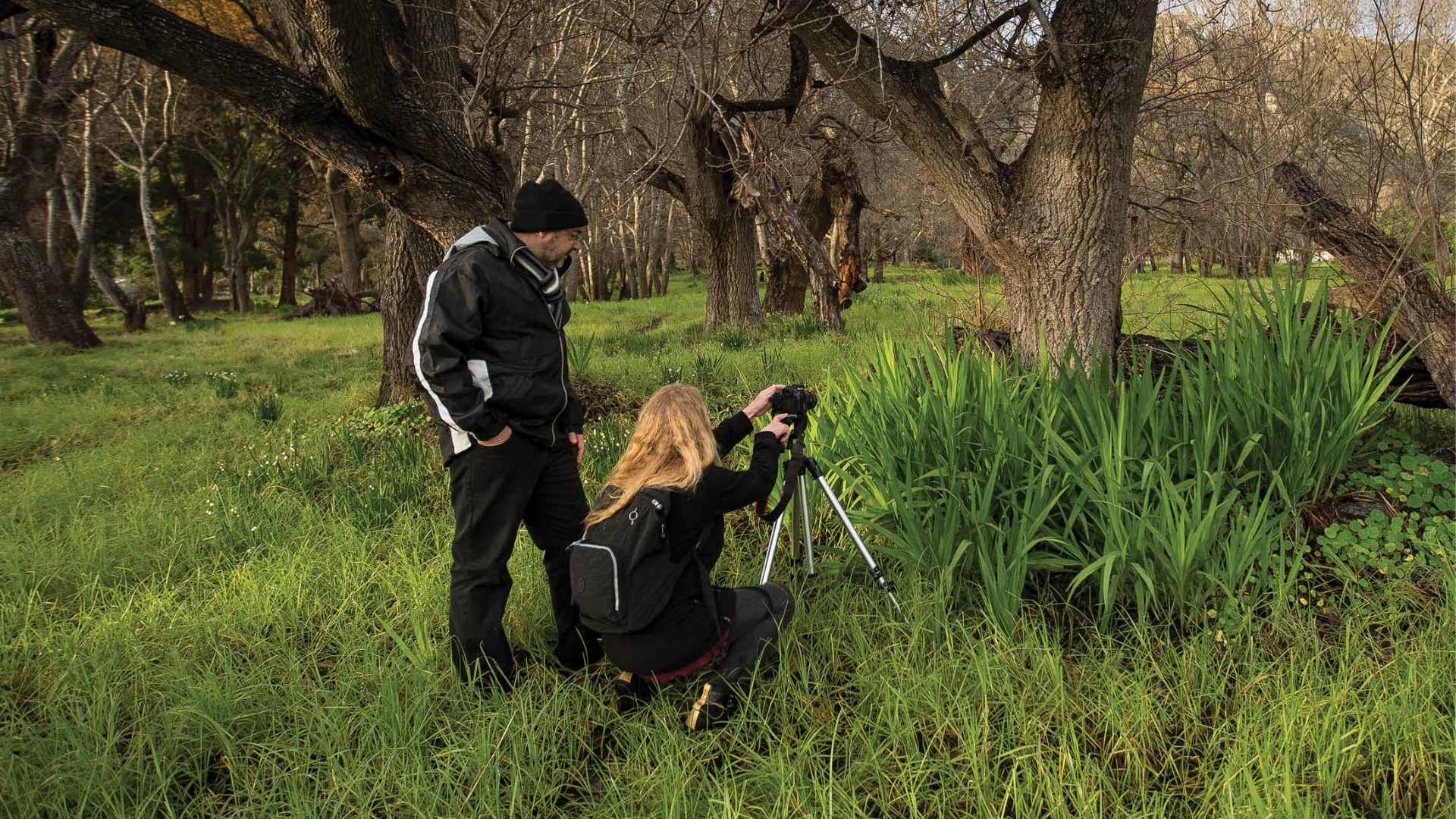
Private lessons
One to one with Martin Osner
In the studio in Hout Bay, out on location around the Cape, or on Zoom from wherever you happen to be.
A private lesson is not a short course. There is no syllabus to work through and no group to keep pace with. You bring whatever you are stuck on, or curious about, or quietly embarrassed not to know, and the whole session is built around that.
Because Martin is also running a gallery and teaching, there are only so many of these in a month. That is not a sales line, it is simply the diary.
The options and prices are directly below.
What it costs
Five ways to do this
Prices are per session, in US dollars. Where two people are shown, the price is for the pair, not each.
Online, via Zoom
One or two hours
Every Zoom lesson is recorded and the recording is yours to keep. Best for portfolio reviews, editing, and working out where your photography is going.
In Studio Practical Session
Three hours, Hout Bay
Hands on, in a working studio, with the equipment set up and running. Lighting, camera, and the things that are far quicker to be shown than to read about.
Half Day on Location
Up to five hours
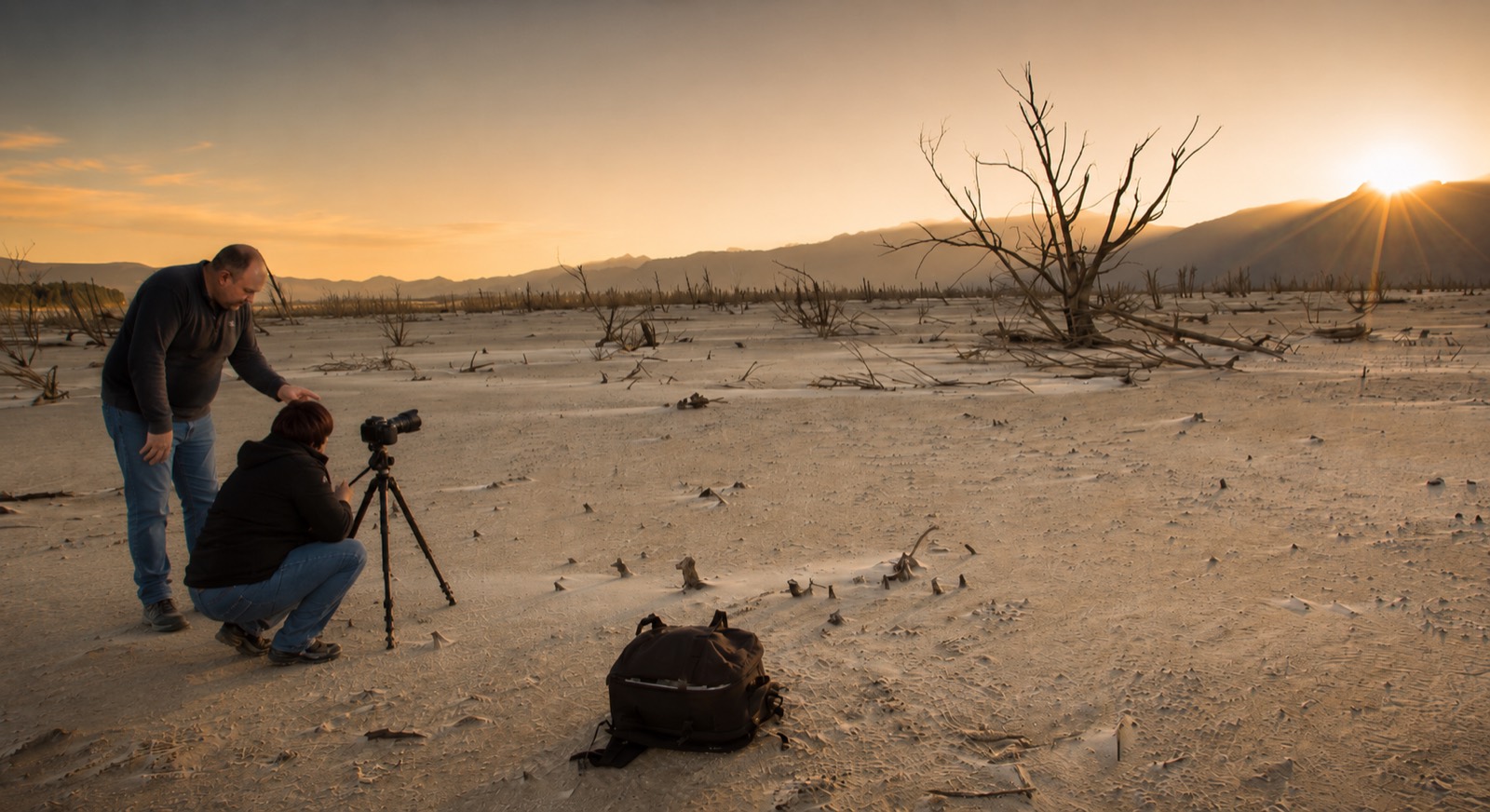
Out photographing, at a location chosen for the day, the weather and the light rather than for convenience.
Full Day on Location
Up to ten hours
The one most visitors book. Early start, the light at both ends of the day, and enough time to actually work rather than snatch at things.
More than two people? Get in touch and we will quote accordingly.
On location sessions. The fee covers Martin’s time and teaching. Travel, meals and any park or entry fees are quoted separately once the location is settled, so you always see them as their own number.
How payment works. A 50% deposit secures your booking and the balance is payable a week before. The whole process is set out further down, in four steps.
Who books these
Three kinds of people, mostly
After thirty years of them, the bookings fall into roughly three groups, and it helps to know which one you are in before you choose a session.
Usually a full day
Visitors to Cape Town
You are here for a fortnight and you would rather spend one day photographing with somebody who already knows where the light will be, and when, than three days finding out. This is the most common booking of all, and a good many of them come back the following year. See every way to learn photography in Cape Town.
Usually on Zoom
Photographers who have lost the thread
Technically competent, photographing regularly, and no longer sure what any of it is for. Nothing is wrong with the pictures, which is precisely the problem. What is needed is somebody honest looking at a body of work and saying what they see.
Usually in the studio
People who want their hands on it
Lighting, the camera, the actual equipment, in a room where it is set up and you can break things without consequence. Three hours of this tends to be worth more than a great deal of reading.
Why one to one
Nobody else in the room
The difference is not that you are given more information. It is that all of it is about your pictures.
- A course has to answer the questions everybody has. A lesson answers the ones you actually have.
- Martin looks at your work, not at a prepared example that was always going to turn out well.
- You can stop him, go back, disagree, or ask the obvious question. Nobody is waiting on you.
- Nothing is theoretical. If you are on location you are photographing, and if you are in the studio your hands are on the equipment.
When a course is the better buy, and it often is
This needs saying plainly, because it is true. What you learn on a $600 course is a great deal more than you will learn in a one to one lesson at the same money, and it is not a close call. The lessons are structured, they build in the right order, and they stay in your library afterwards.
So if what you need is the basics of photography, or you are working your way from intermediate towards advanced, do the online course first. It is the better teaching for that job, it costs less, and you can take it at your own pace.
Private lessons earn their price in two situations. When it is a location experience, where being in the right place at the right hour is the entire point and no course can hand you that. And when there is a specific reason for somebody to be standing at your shoulder while you work.
Paying a higher price for foundation teaching that is already there, and easy to do, makes no sense to us. Do the course. Then come out for the day.
A full day on location
Every March, for several years running
★★★★★
“We have booked Martin for his one to one teaching and guiding service for several years. Every March, during our annual visit to Cape Town, we set aside a whole day for photography, and each time Martin has taken us to some truly remarkable landscape locations. His in depth knowledge of the area and understanding of weather conditions and lighting are incredible.”
“I suppose thirty odd years of experience speaks for itself. His one to one coaching is outstanding, we have learned so much from him and captured some fantastic photographs under his guidance.”
Fred & Ina Harfield, United KingdomThe word worth noticing there is several. A day out with somebody who does not know the coast is a pleasant day out. A day with somebody who has photographed it for three decades is the difference between arriving somewhere, and arriving somewhere at the right hour.
What actually happens
Three quite different days
People book these expecting a lesson, and are usually surprised by how little it resembles one. Here is what each of the three is really like.
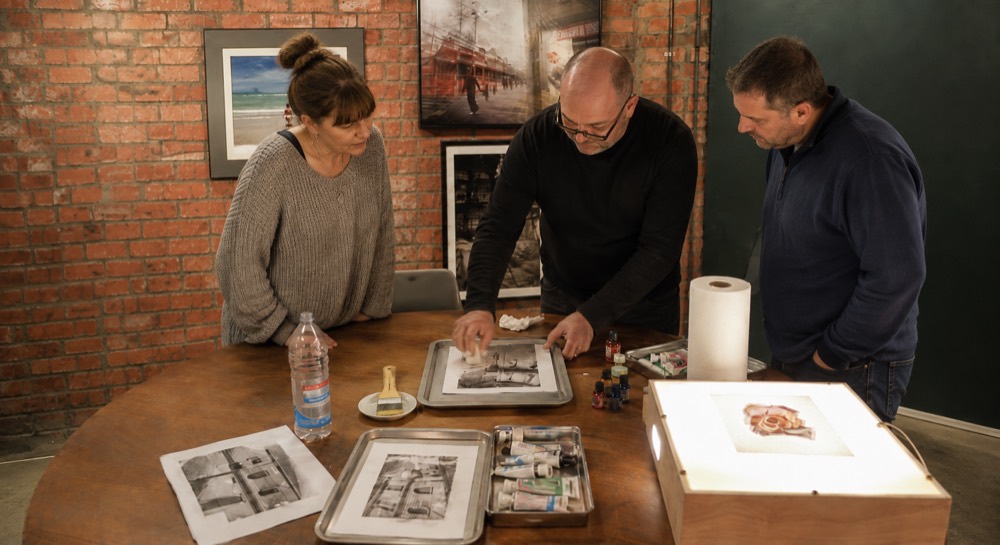
In the studio
Hout Bay. Equipment set up and running, and three hours of doing rather than watching. Bring your own camera, because the point is that you can repeat all of it afterwards on your own gear.
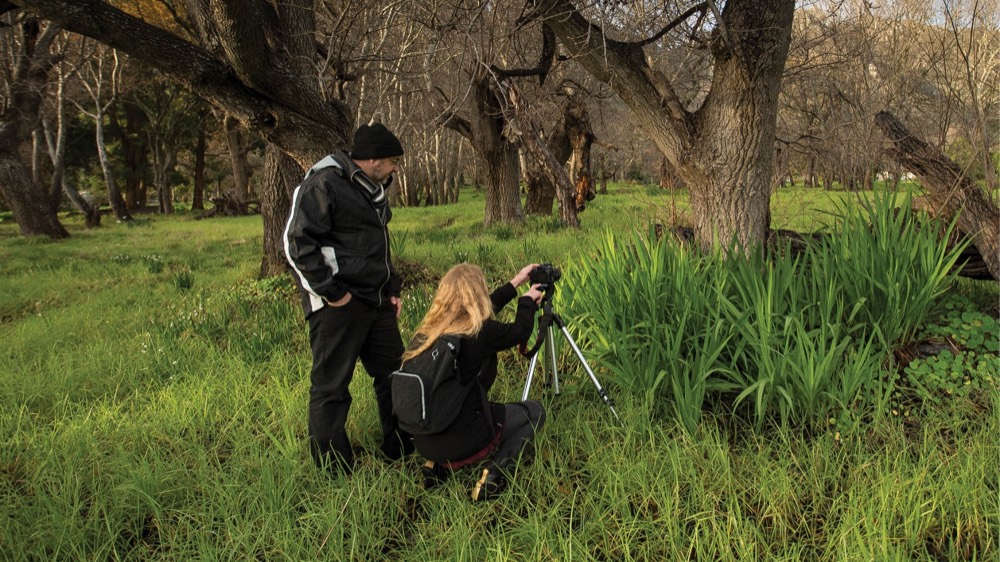
On location
Where you go is decided on the day, from the weather and the light, not from a list. Early starts are common and unapologetic. You photograph, Martin watches how you work, and the teaching happens in between rather than in front of you.
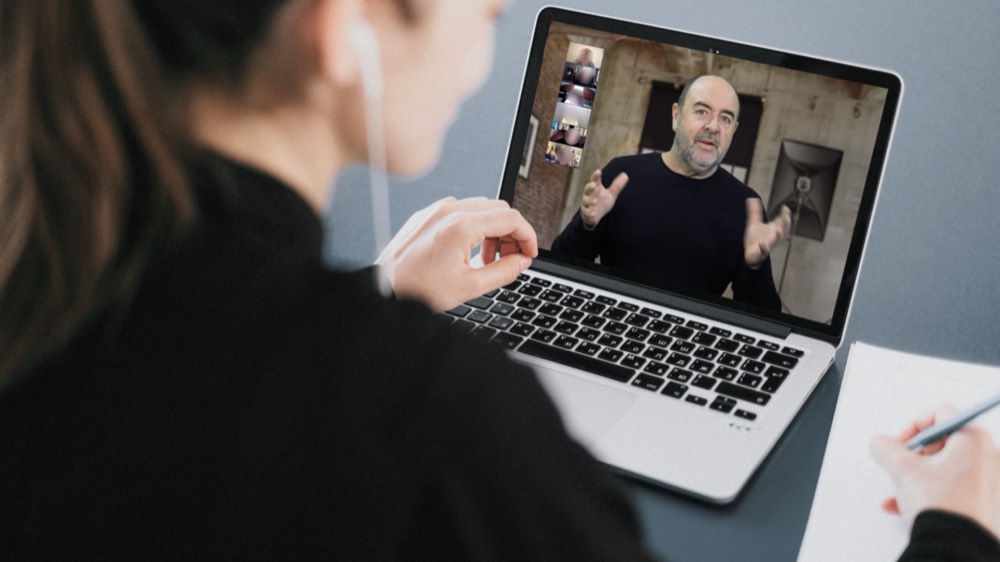
On Zoom
Your pictures on the screen and somebody going through them honestly. Often the most useful of the three and the least comfortable. Recorded, so you can go back to what was said once the sting has worn off.
On Zoom, from Argentina
Sometimes honest is the thing you are short of
★★★★★
“Despite the early morning Zoom sessions due to the time difference, my private lessons with Martin have been a fantastic experience and of great value. I needed guidance to find direction in my photography, and he has helped me achieve that.”
“His honest feedback has been invaluable. Sometimes that is exactly what we need when making creative decisions. I am not done yet, but I have already made great strides.”
Paula dos Santos, ArgentinaDirection is the thing almost nobody can give themselves. You are too close to your own pictures to see what they keep saying, and the people around you are too kind to tell you. An hour of somebody experienced being straight with you is worth a great deal more than another year of guessing.
How booking works
Four steps, and no surprises in them
You send the booking form
It asks which session you want, which dates would suit, what you would like to work on, and what camera you use. Nothing is committed at this point.
We come back to you within 48 hours
To talk it through properly and see whether your dates can actually be scheduled. Availability is limited and the diary is the diary.
You receive an invoice
Once the booking is made you are sent an invoice, and you pay the 50% deposit against it. By electronic transfer, by card through a payment link, or by PayPal.
The deposit confirms it
When the deposit reaches us your booking is confirmed and the date is held for you. The balance is payable one week before the lesson.
Please note. A booking is not confirmed until the deposit has been received. Until then the date stays open to everybody else, so if you have travel built around it, it is worth paying the deposit promptly.
Lessons confirmed within a week of the date are payable in full at the time of booking.
Before you book
The questions people actually ask
Mostly practical ones, because a lesson means turning up somewhere at a particular hour. Tap any question to open its answer.
Where do the in person lessons happen?
Studio sessions are at Martin’s studio in Hout Bay, Cape Town. Location sessions are anywhere around the Cape that suits the day, and the exact place is settled once we know the date and what the weather is doing.
What is included in the price, and what is not?
The fee covers Martin’s time, teaching and expertise. Travel, meals, park or entry fees and accommodation are not included, and are quoted separately before you commit to anything.
What if I need to move the date?
Move it as often as you reasonably need to, at no charge, as long as you give us more than 48 hours. Inside 48 hours the session is charged in full, because the time has been held for you. It is all on our cancellation policy page.
Do I get a recording of a Zoom lesson?
Yes. Every Zoom session is recorded and you are sent a copy afterwards, so you can go back to it rather than trying to write everything down at the time.
Can I book with a friend or a partner?
Yes, and there are two person prices for the studio session, the half day and the full day. For more than two, get in touch and we will quote accordingly.
Do you do portfolio reviews?
Yes, and they work particularly well on Zoom. Bring a body of work rather than your best five pictures, because what is useful is what the work keeps doing when you are not thinking about it.
What level do I need to be?
Any level. If what you really need is a structured grounding, Martin will tell you a course would serve you better, but plenty of near beginners book a studio session and get a great deal out of it.
What camera should I bring?
Your own, whatever it is. The point of a practical session is that you can repeat it afterwards on your own equipment, which does not work if you spent the day on somebody else’s.
Your custom embed codeWhen you are ready
Send the form and we will talk
Filling it in does not commit you to anything. It tells us what you want to work on and when you might be free, and it saves both of us a week of emails working that out.
If you are travelling to Cape Town, send it earlier than feels necessary. The days that go first are the ones people have built a whole trip around, and a diary that is already full cannot be unfilled.
The form opens in a new tab, so this page stays where it is.